
Why Property Operations Break Without Centralized Request Management
Property operations break when requests are scattered across channels, causing missed tasks, delayed responses, poor visibility, and inefficient execution daily.
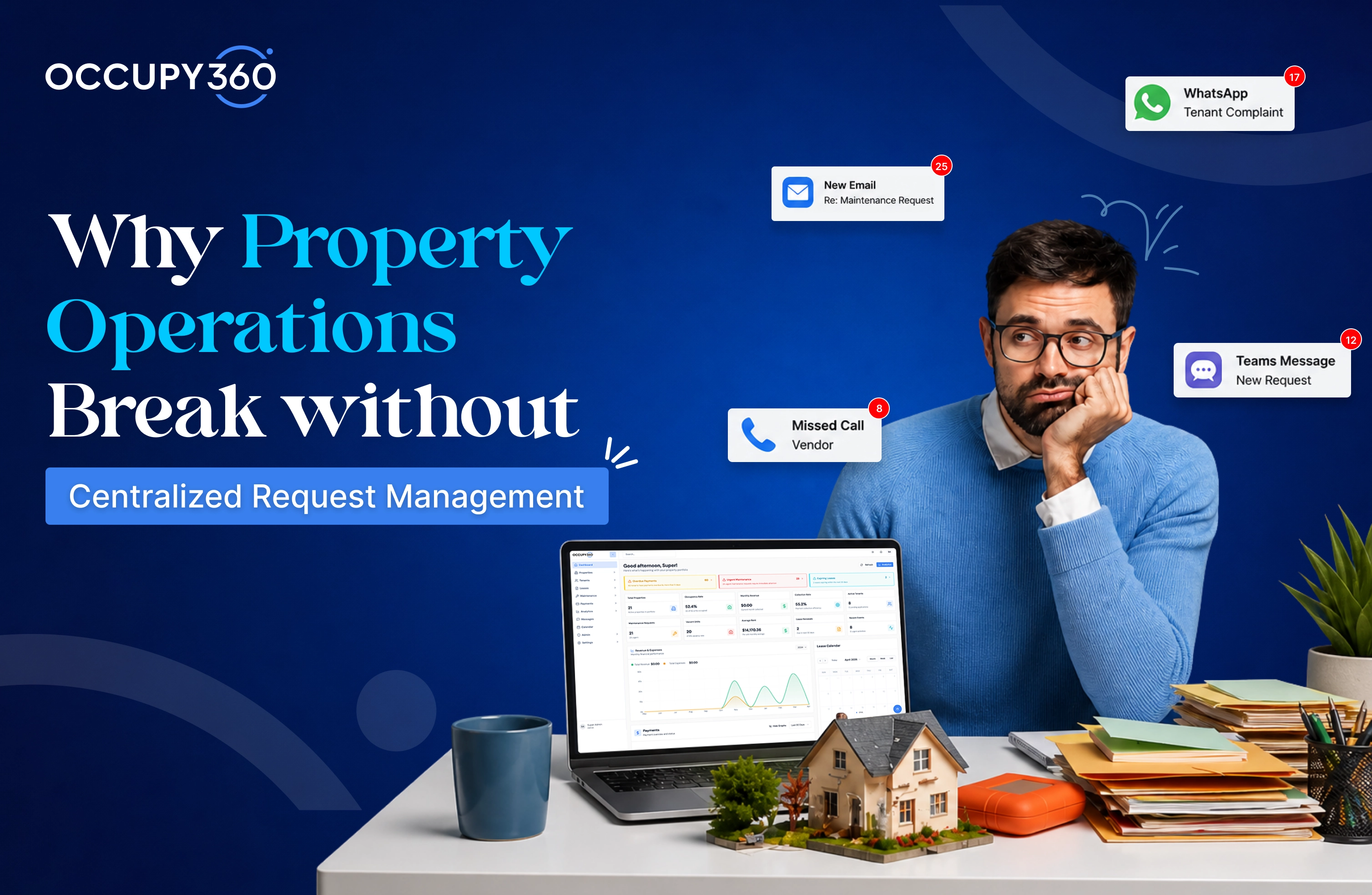
Property operations rarely collapse because teams are incapable or unwilling to put in the effort. In most cases, they break down because there is no structured system to manage and track incoming requests across properties.
A tenant reports a leaking pipe over a phone call. Another raises a maintenance issue on WhatsApp. Someone else sends an email asking for a lease update. Meanwhile, your internal team is coordinating over chats, spreadsheets, and verbal updates.
Everything seems manageable in the moment. But over time, this scattered approach creates gaps that are difficult to detect—and even harder to fix.
This is where property operations begin to fail, not due to scale or complexity, but due to lack of centralized visibility and structured execution.
The Core Problem: Requests Are Fragmented Across Channels
Most property management teams rely on multiple communication channels to receive and respond to tenant requests. While this flexibility may seem convenient, it creates a fragmented system where information is spread across disconnected platforms.
Requests typically come through:
- Phone calls that are not logged anywhere
- WhatsApp messages that get buried in conversations
- Emails that are overlooked or delayed
- Verbal complaints that depend entirely on memory
- Internal chats that lack proper tracking
When these channels operate independently, there is no single source of truth. As a result, teams lose the ability to clearly understand what is happening across their properties at any given time.
When Requests Are Not Centralized, Operations Start Losing Control
At first, the impact of scattered requests may appear minor. A delayed response here or a missed update there might not seem critical. However, as these instances accumulate, they begin to disrupt the overall flow of operations.
Requests Start Slipping Through the Cracks
Without a centralized system to capture every request, there is no guarantee that each issue is properly recorded and tracked. A tenant message might be missed, an email might go unread, or a verbal complaint might simply be forgotten during a busy day.
Over time, these missed requests translate into unresolved issues, creating frustration for tenants and increasing pressure on internal teams.
Teams Spend More Time Following Up Than Executing
In the absence of visibility, teams are forced to rely heavily on manual follow-ups to stay informed about ongoing tasks. Instead of focusing on resolving issues, they constantly check with each other to understand what has been done and what is still pending.
This creates unnecessary communication overhead, slows down execution, and reduces overall productivity.
Lack of Ownership Leads to Delays and Confusion
When requests are not managed within a structured system, ownership becomes unclear. Multiple team members may assume someone else is handling a task, or worse, the same task may be picked up by multiple people without coordination.
This lack of clarity results in delays, duplication of effort, and inconsistent communication with tenants.
Delays Become Embedded in the Process
Without real-time tracking and visibility, delays are not easily identified or addressed. Teams do not have a clear view of which requests are overdue or which tasks are stuck at a particular stage.
As a result, delays gradually become normalized, and operational inefficiencies go unchallenged.
Tenant Experience Starts to Decline
Tenants expect timely responses and clear communication. When they have to repeatedly follow up, restate their concerns, or wait without updates, their experience deteriorates.
This not only affects tenant satisfaction but also impacts retention and the overall reputation of the property.
The Real Challenge Is Not Volume, It Is Visibility
A common misconception in property management is that operational challenges arise primarily due to a high volume of requests. While volume does play a role, it is not the root cause of inefficiency.
The real issue lies in the inability to track, monitor, and manage requests in a structured and visible manner.
Even a moderate number of requests can create chaos if they are not centrally managed. On the other hand, teams handling large volumes can operate efficiently when they have complete visibility and control over their workflows.
How Centralized Systems Bring Operational Control?
Centralized request management brings all incoming requests into a single system, allowing teams to track, assign, and manage them in a structured way. This shift fundamentally changes how property operations function.
Every Request Is Logged and Trackable
Instead of relying on scattered communication channels, all requests are captured within one platform. This ensures that no issue goes unnoticed and every request can be monitored from start to completion.
Clear Ownership Ensures Accountability
Each request is assigned to a specific individual or team, removing any ambiguity around responsibility. This clarity ensures that tasks are handled promptly and updates are communicated effectively.
Real-Time Visibility Enables Faster Decisions
With a centralized system, teams can instantly view the status of all requests across properties. This real-time visibility allows managers to identify delays, prioritize tasks, and make informed decisions without relying on constant updates.
Structured Workflows Replace Informal Handling
Requests move through predefined stages, ensuring consistency in how tasks are handled across different properties. This reduces variability, minimizes errors, and improves overall efficiency.
Reduced Dependency on Manual Follow-Ups
Since all information is available within the system, teams no longer need to rely on frequent follow-ups to stay updated. This reduces communication overhead and allows teams to focus on execution.
A Clear Shift in How Operations Run
The difference between fragmented and centralized operations is significant.
In a fragmented setup, requests are scattered, tracking is inconsistent, ownership is unclear, and delays are difficult to identify. Teams operate reactively, and tenants often experience slow or inconsistent service.
In a centralized system, every request is visible, properly assigned, and tracked through a defined process. Teams operate proactively, issues are resolved faster, and tenants receive a more reliable experience.
Where Occupy360 Fits In?
Occupy360 is designed to bring this level of structure and visibility into property operations without adding complexity.
It centralizes all incoming requests, tracks them throughout their lifecycle, assigns clear ownership, and provides real-time visibility across properties. By doing so, it eliminates the need for scattered tools and manual coordination.
Teams can manage operations with confidence, knowing that every request is accounted for and every task is progressing as expected.
Final Thought
Property operations do not break suddenly. They weaken over time due to small gaps in tracking, communication, and execution.
Most teams attempt to solve these issues by increasing effort or adding more people. However, the real solution lies in building a system that provides clarity and structure.
When requests are centralized, workflows are defined, and visibility is clear, operations become more predictable and easier to manage.
In this article